
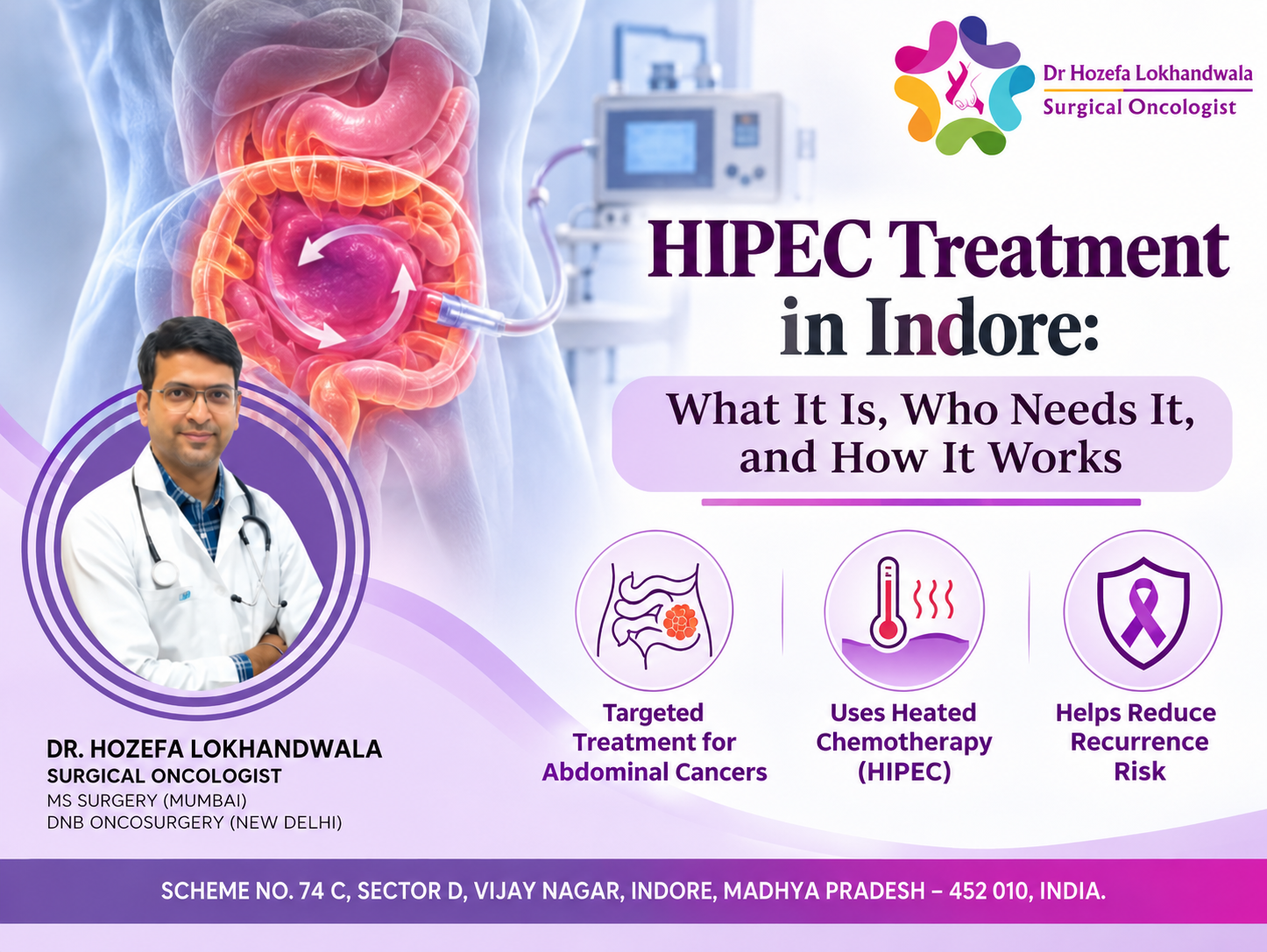
HIPEC treatment in Indore is an advanced cancer treatment option for selected patients with cancers that have spread within the abdominal cavity. It combines cytoreductive surgery with heated chemotherapy delivered directly into the abdomen, targeting microscopic cancer cells that may remain after visible tumours are removed.
If you or any known to person around you has been advised to consider HIPEC surgery in Indore, consulting an experienced surgical oncologist in Indore is important. Dr. Hozefa Lokhandwala, a cancer surgeon in Indore and HIPEC specialist, can assess whether HIPEC treatment in Indore is suitable based on your cancer type, imaging reports, pathology, and overall health. HIPEC stands for Hyperthermic Intraperitoneal Chemotherapy. It is usually performed immediately after cytoreductive surgery, during the same operation, to treat cancer cells in the peritoneum—the thin lining that covers the organs inside the abdomen.
What Is HIPEC Treatment in Indore?
HIPEC treatment in Indore is a specialised procedure used for selected cancers that have spread to the lining of the abdominal cavity, known as the peritoneum. It is not a standalone treatment; it is generally combined with cytoreductive surgery, which removes visible tumour deposits from the abdomen. During HIPEC, a heated chemotherapy solution is circulated inside the abdominal cavity after the surgeon has removed visible cancer. The aim is to destroy microscopic cancer cells that may remain after surgery.
What Does HIPEC Stand For?
HIPEC stands for Hyperthermic Intraperitoneal Chemotherapy.
- Hyperthermic means heated
- Intraperitoneal means inside the abdominal cavity
- Chemotherapy means anti-cancer medicines
In HIPEC treatment, chemotherapy at a temperature of around 41-43 degree Celsius and circulated within the abdomen. This allows higher concentrations of chemotherapy to be delivered directly to the abdominal cavity while limiting systemic exposure compared with conventional intravenous chemotherapy.
What Is Hyperthermic Intraperitoneal Chemotherapy?
Hyperthermic intraperitoneal chemotherapy is a targeted regional treatment. It is used when cancer cells are present in the peritoneal cavity, often after cancers of the ovary, colon, appendix, stomach, or peritoneum have spread within the abdomen. The heat may improve the effect of chemotherapy on cancer cells within the abdominal cavity. However, HIPEC is a complex treatment and is not appropriate for every patient with cancer.
How Does HIPEC Treatment Work?
HIPEC treatment works in two stages:
- Cytoreductive surgery: The surgical oncologist removes visible tumour deposits from the abdominal cavity.
- HIPEC: Heated chemotherapy is circulated inside the abdomen to target remaining microscopic cancer cells.
This combined approach is often called CRS and HIPEC—cytoreductive surgery and hyperthermic intraperitoneal chemotherapy.
What Is Cytoreductive Surgery?
Cytoreductive surgery in Indore is the surgical removal of visible cancer deposits from the abdominal cavity. Depending on the extent and location of cancer, the surgeon may remove tumour deposits from the peritoneum and, when required, perform resections involving affected organs or tissues. The goal is to remove as much visible cancer as safely possible. This is important because HIPEC works best when the surgeon can achieve a complete or near-complete removal of visible disease.
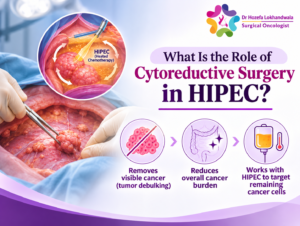
What Is the Role of Cytoreductive Surgery in HIPEC?
Cytoreductive surgery reduces the tumour burden inside the abdomen. HIPEC is then used to treat microscopic cancer cells that may remain after visible disease has been removed.
In simple terms:
- Cytoreductive surgery removes visible cancer
- HIPEC targets remaining microscopic cancer cells
- Both steps are performed during the same operation
This is why HIPEC surgery in Indore is a major procedure requiring careful planning, experienced surgical oncology care, anaesthesia support, and post-operative monitoring.
Who Needs HIPEC Treatment in Indore?
HIPEC treatment in Indore may be considered for selected patients with advanced cancer predominantly involving the abdominal cavity. It is not suitable for every cancer patient, and the decision is made after detailed staging and multidisciplinary assessment.
A cancer specialist in Indore may consider HIPEC if:
- Cancer has spread to the peritoneum
- Visible tumour deposits can be safely removed with surgery
- There is no widespread distant spread to organs such as the liver, lungs, or bones
- The patient is medically fit for major surgery
- Imaging and pathology support a potentially complete cytoreduction
- The treatment goal is disease control or potential long-term benefit
Who Is Not a Candidate for HIPEC Treatment?
HIPEC may not be suitable for patients with:
- Widespread cancer outside the abdomen
- Extensive disease that cannot be safely removed
- Poor overall health or major organ dysfunction
- Significant nutritional problems
- Cancer types or disease patterns for which HIPEC is not known to provide benefit
The decision for HIPEC surgery is usually made in a multidisciplinary meetings involving surgical oncologist, medical oncologist, pathologist & radiologist. The decision should always be individualised based on the patient’s cancer type, stage, imaging, pathology, and overall fitness.
Which Cancers Can Be Treated With HIPEC?
HIPEC may be considered for selected cancers that originate in, or spread to, the abdominal cavity. Common cancer types where HIPEC may be discussed include:
- Ovarian cancer
- Colorectal cancer
- Appendix cancer
- Gastric or stomach cancer
- Peritoneal mesothelioma
- Pseudomyxoma peritonei
- Selected cases of peritoneal carcinomatosis
HIPEC is most often considered when cancer has spread to the peritoneum but remains potentially resectable with surgery.
HIPEC for Ovarian Cancer in Indore
HIPEC for ovarian cancer may be considered in selected patients with peritoneal disease. Cytoreductive surgery aims to remove visible ovarian cancer deposits from the abdomen, while HIPEC targets residual microscopic disease. If you have ovarian cancer with peritoneal involvement, consult a cancer surgeon in Indore who has experience in cytoreductive surgery and HIPEC. Dr. Hozefa Lokhandwala can evaluate whether HIPEC treatment in Indore is appropriate for your situation.
HIPEC for Colorectal and Appendix Cancer in Indore
HIPEC for colorectal cancer and appendix cancer may be considered when cancer has spread to the peritoneum. In selected cases, cytoreductive surgery followed by HIPEC can be part of a treatment strategy for peritoneal disease. For appendix cancer and pseudomyxoma peritonei, HIPEC may be particularly relevant because these conditions can produce mucinous tumour deposits within the abdomen. A HIPEC specialist in Indore can assess the extent of disease and determine whether surgery with HIPEC is feasible.
HIPEC for Stomach and Peritoneal Cancer in Indore
HIPEC for stomach cancer may be considered in selected cases where peritoneal spread is present or at high risk. HIPEC for peritoneal mesothelioma and other peritoneal surface malignancies may also be considered after detailed assessment. Not every patient with stomach or peritoneal cancer is a candidate for HIPEC. The decision depends on the extent of disease, organ involvement, nutritional status, and ability to tolerate major surgery.
HIPEC Surgery in Indore: Step-by-Step Procedure
HIPEC surgery in Indore is a major operation performed under general anaesthesia. It involves both surgical removal of cancer and heated chemotherapy treatment within the abdomen.
Before HIPEC treatment
Before HIPEC treatment in Indore, your cancer specialist in Indore may recommend:
- Detailed imaging, such as CT or PET-CT
- Tumour marker blood tests
- Biopsy or pathology review
- Colonoscopy or endoscopy, when relevant
- Nutritional assessment
- Cardiac and anaesthesia fitness assessment
- Multidisciplinary tumour board discussion
These tests help determine whether the cancer is potentially resectable and whether HIPEC is likely to provide benefit.
During HIPEC surgery
During HIPEC surgery in Indore, the surgical oncologist:
- Performs cytoreductive surgery to remove visible tumour deposits
- Checks whether a complete or near-complete cytoreduction is achievable
- Places catheters and temperature probes inside the abdomen
- Circulates heated chemotherapy solution within the abdominal cavity
- Monitors temperature, drug delivery, and patient safety throughout the procedure
The HIPEC circulation commonly lasts about 60–90 minutes, although the entire operation may take several hours depending on the extent of disease and organs involved.
After HIPEC surgery
After HIPEC surgery, patients are closely monitored in a hospital setting. Some patients may require ICU care initially, depending on the extent of surgery, blood loss, nutritional status, and overall condition.
Post-operative care may include:
- Pain management
- Intravenous fluids and nutrition
- Antibiotics, if required
- Monitoring of kidney, liver, and blood counts
- Early mobilisation
- Wound care
- Diet progression
- Follow-up with the surgical oncologist
Recovery After HIPEC Surgery in Indore
Recovery after HIPEC surgery in Indore varies from patient to patient. It depends on the extent of cytoreductive surgery, the organs involved, the patient’s nutritional status, and whether any complications occur. Many patients need close monitoring, sometimes ICU care, and a hospital stay that may range from several days to around one to two weeks. Full recovery can take several weeks or longer.
What Is the Hospital Stay After HIPEC Surgery?
The hospital stay after HIPEC surgery may vary, but close monitoring is essential in the initial days after the procedure. Patients may need intravenous fluids, nutrition support, pain medicines, and gradual return to oral intake. Your surgical oncologist in Indore will advise when you can start walking, eating normally, and returning to daily activities.
What Are the Possible Side Effects of HIPEC?
HIPEC treatment can have side effects because it involves major surgery and chemotherapy exposure. Possible risks include:
- Pain and fatigue
- Nausea and vomiting
- Reduced appetite
- Infection
- Bleeding
- Blood clots
- Kidney or liver function changes
- Delayed recovery of bowel function
- Nutritional deficiencies
- Wound complications
- Need for further treatment
Your cancer surgeon in Indore will discuss the expected benefits and risks based on your specific cancer type and overall health. HIPEC is a major procedure, and careful patient selection is essential.
Risks and Benefits of HIPEC Treatment
Potential benefits
HIPEC treatment may offer potential benefits for carefully selected patients with peritoneal disease, including:
- Removal of visible abdominal cancer deposits
- Targeted delivery of heated chemotherapy inside the abdomen
- Potential control of peritoneal disease
- Possible improvement in disease control in selected cancer types
- A treatment option when cancer is otherwise difficult to treat with surgery alone
HIPEC is generally considered when cytoreductive surgery can achieve a complete or near-complete removal of visible disease.
Potential risks
HIPEC is a complex treatment and carries risks, including:
- Major surgical complications
- Infection
- Bleeding
- Blood clots
- Organ dysfunction
- Prolonged hospital stay
- Need for intensive care
- Nutritional challenges
- Recovery-related complications
The decision to proceed with HIPEC should be made after a detailed discussion with an oncologist in Indore, a surgical oncologist in Indore, anaesthesia team, and other specialists involved in your care.

When to Consult a HIPEC Specialist in Indore
Consult a HIPEC specialist in Indore if you have been diagnosed with ovarian, colorectal, appendix, gastric, or peritoneal cancer and your oncology team has mentioned peritoneal spread, recurrent abdominal disease, or cytoreductive surgery. A surgical oncologist can assess whether HIPEC treatment in Indore is appropriate for you.
You may benefit from a consultation if:
- You have peritoneal carcinomatosis
- You have recurrent ovarian cancer with abdominal disease
- You have colorectal cancer with peritoneal spread
- You have appendix cancer or pseudomyxoma peritonei
- You have peritoneal mesothelioma
- You have been advised to consider cytoreductive surgery
- You want a second opinion about HIPEC treatment in Indore
A cancer specialist in Indore can coordinate imaging, pathology, chemotherapy planning, and surgical assessment to determine the most appropriate treatment pathway.
Why Choose Dr. Hozefa Lokhandwala for HIPEC Treatment in Indore?
Dr. Hozefa Lokhandwala is a surgical oncologist in Indore and HIPEC specialist who evaluates patients with abdominal and peritoneal cancers. As an experienced cancer surgeon in Indore, he can assess whether cytoreductive surgery and HIPEC treatment in Indore are appropriate based on imaging, pathology, and overall clinical condition.
Patients seeking an oncologist in Indore for peritoneal cancer, ovarian cancer, colorectal cancer, appendix cancer, or gastric cancer can consult Dr. Hozefa Lokhandwala for a detailed evaluation. A cancer specialist in Indore can help determine whether HIPEC surgery in Indore is suitable and coordinate the required treatment plan.
When to book an appointment
Book an appointment with Dr. Hozefa Lokhandwala if you have:
- Ovarian cancer with peritoneal involvement
- Colorectal cancer with peritoneal spread
- Appendix cancer or pseudomyxoma peritonei
- Peritoneal mesothelioma
- Recurrent abdominal cancer
- A recommendation for cytoreductive surgery
- Questions about HIPEC treatment in Indore
- Need for a second opinion from a surgical oncologist in Indore
Dr. Hozefa Lokhandwala can help determine whether HIPEC treatment in Indore is appropriate and guide you through the evaluation, surgery, recovery, and follow-up process.
FAQs: HIPEC Treatment in Indore, Candidates, and Recovery
What is HIPEC treatment in Indore?
HIPEC treatment in Indore is an advanced cancer treatment that combines cytoreductive surgery with heated chemotherapy delivered directly inside the abdominal cavity. It is mainly used for selected cancers that have spread to the peritoneum, the lining of the abdomen.
Who needs HIPEC treatment in Indore?
HIPEC treatment in Indore may be considered for selected patients with ovarian cancer, colorectal cancer, appendix cancer, gastric cancer, peritoneal mesothelioma, or pseudomyxoma peritonei that has spread within the abdomen. Suitability depends on the extent of disease, overall health, and absence of widespread distant metastasis.
What is cytoreductive surgery?
Cytoreductive surgery is the surgical removal of visible cancer deposits from the abdominal cavity. It is performed before HIPEC so that heated chemotherapy can target remaining microscopic cancer cells.
How does HIPEC treatment work?
After cytoreductive surgery, a heated chemotherapy solution is circulated inside the abdomen for about 60–90 minutes. The heat helps chemotherapy penetrate residual cancer cells while limiting systemic exposure compared with conventional intravenous chemotherapy.
Is HIPEC the same as chemotherapy?
HIPEC is a specialised form of chemotherapy delivered directly into the abdominal cavity during surgery. It is different from regular intravenous chemotherapy because the drug is heated and circulated locally within the abdomen.
Which cancers can be treated with HIPEC?
HIPEC may be considered for selected cases of ovarian cancer, colorectal cancer, appendix cancer, stomach cancer, peritoneal mesothelioma, and pseudomyxoma peritonei. The final decision depends on cancer type, disease spread, and overall fitness for major surgery.
Is HIPEC treatment painful?
HIPEC surgery is performed under general anaesthesia, so patients do not feel pain during the procedure. Some pain, fatigue, nausea, and discomfort can occur during recovery, and pain management is part of post-operative care.
How long does HIPEC surgery take?
HIPEC surgery, including cytoreductive surgery, can take several hours depending on the extent of cancer and the organs involved. The HIPEC circulation itself commonly lasts about 60–90 minutes.
What is the recovery time after HIPEC surgery in Indore?
Recovery varies by patient and extent of surgery. Many patients need close monitoring, sometimes ICU care, and a hospital stay that may range from several days to around one to two weeks.
When should I consult a HIPEC specialist in Indore?
Consult a HIPEC specialist in Indore if you have been diagnosed with ovarian, colorectal, appendix, gastric, or peritoneal cancer and your oncology team has mentioned peritoneal spread, recurrent abdominal disease, or cytoreductive surgery. A surgical oncologist can assess whether HIPEC treatment in Indore is appropriate for you.
Why choose Dr. Hozefa Lokhandwala for HIPEC treatment in Indore?
Dr. Hozefa Lokhandwala is a surgical oncologist in Indore and HIPEC specialist in Indore who evaluates patients with abdominal and peritoneal cancers. He can assess whether cytoreductive surgery and HIPEC treatment in Indore are suitable based on imaging, pathology, and overall clinical condition.
Final Thoughts: HIPEC Treatment in Indore
HIPEC treatment in Indore is a specialised option for selected patients with cancers that have spread within the abdominal cavity. It combines cytoreductive surgery with heated chemotherapy to target residual cancer cells after visible tumours are removed. HIPEC is not suitable for every cancer patient. The decision should be made after detailed staging, imaging, pathology review, nutritional assessment, and discussion with an experienced cancer surgeon in Indore and oncologist in Indore.
If you have been advised to consider HIPEC surgery in Indore, consult Dr. Hozefa Lokhandwala, an experienced surgical oncologist in Indore and HIPEC specialist, for a personalised evaluation and treatment plan. This article is for educational purposes only and does not replace personalised medical advice. HIPEC is a complex treatment and should only be considered after detailed assessment by a qualified cancer specialist in Indore.
