
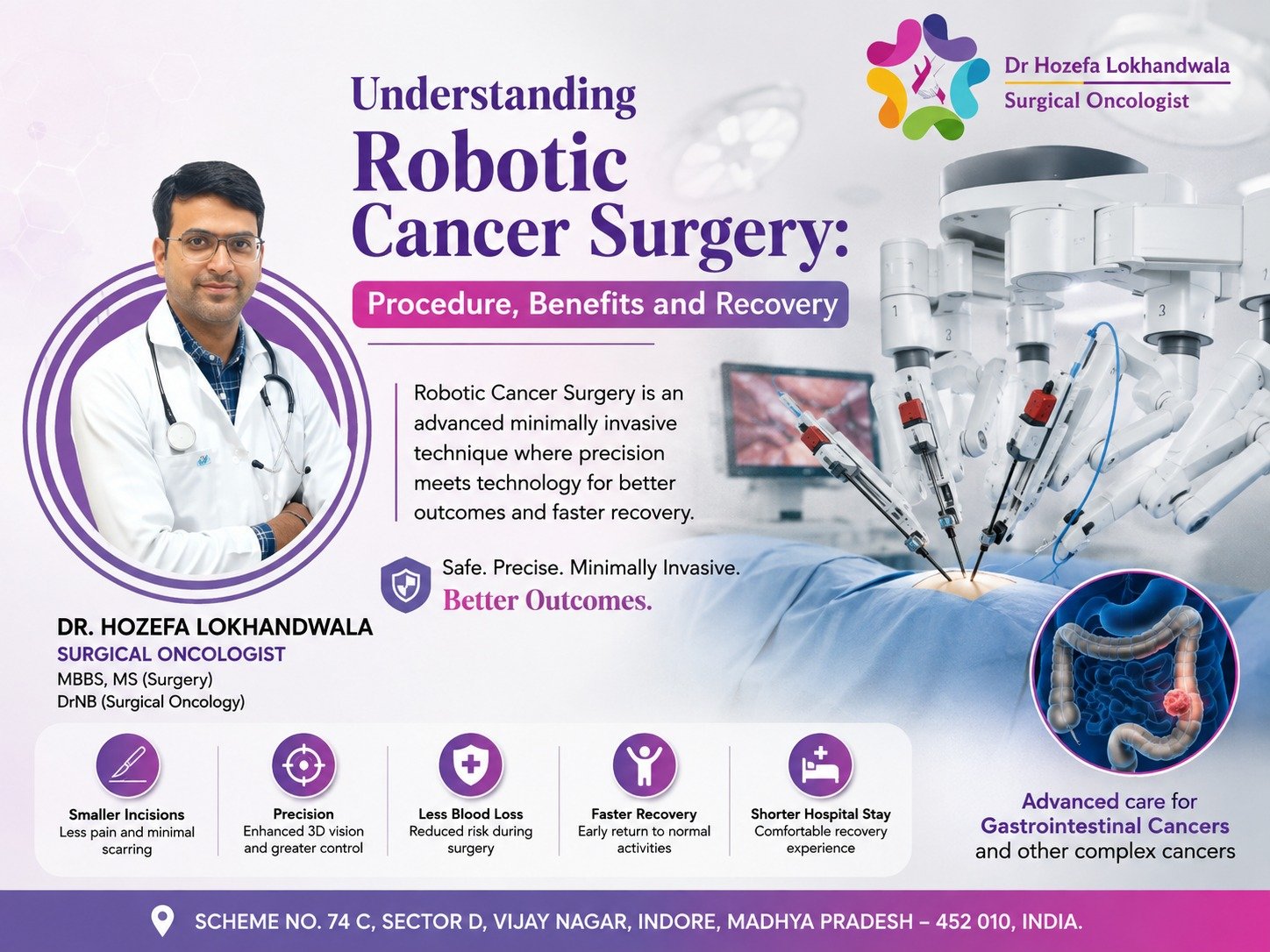
Cancer Surgeon in Indore care has evolved significantly with advances in surgical techniques. One such development is robotic-assisted surgery, which may be considered for selected cancer patients when surgery is part of the treatment plan. Robotic cancer surgery combines the expertise of a trained surgeon with the help of robot to perform complex procedures through small incisions in suitable cases.
For patients, hearing the term “robotic surgery” can raise many questions. Does the robot perform the operation? Is robotic surgery suitable for every type of cancer? What happens during the procedure? How long does recovery take? Understanding these aspects can help patients make informed decisions about their treatment.
Robotic surgery is generally a form of minimally invasive surgery. The surgeon controls the robot throughout the procedure, using enhanced 3D visualization and specially designed instruments. It is not an independent treatment performed by a machine.
Robotic Cancer Surgery in Indore may be considered for selected cancers depending on the location and stage of the disease, the patient’s overall health, and the surgeon’s assessment of the extent of the disease. The decision should always be individualized rather than based simply on the availability of technology.
Dr. Hozefa Lokhandwala is a Senior Consultant Surgical Oncologist with more than 10 years of experience. His areas of surgical oncology include head and neck, breast, gastrointestinal and gynecological cancers, along with advanced cancer surgeries such as HIPEC for peritoneal surface malignancy. He also has experience in robotic urological, gynecological & GI cancer surgeries.
Why Choose Dr. Hozefa Lokhandwala – Cancer Surgeon in Indore?
Choosing a cancer surgeon involves more than looking at a procedure or technology. Cancer treatment often requires careful assessment, detailed discussion and coordination between different aspects of oncology care.
Dr. Hozefa Lokhandwala is a Senior Consultant Surgical Oncologist with more than 10 years of clinical experience. His preference is to give the best surgical outcome to the patient by incorporating minimally invasive surgery in the form of robotic surgery, thereby ensuring quick recovery after advanced surgery.
A patient-focused approach is particularly important in oncology. Dr. Lokhandwala emphasizes personalized attention, clear communication and honest guidance so that patients can understand their diagnosis and available treatment options.
For patients looking for a Cancer Surgeon in Indore, understanding the area of expertise and experience with the relevant cancer type can be an important part of choosing appropriate care.
About Dr. Hozefa Lokhandwala
Dr. Hozefa Lokhandwala is a Senior Consultant Surgical Oncologist with more than 10 years of experience in cancer surgery.
His areas of clinical interest include:
- Head and neck cancers
- Breast cancers
- Gastrointestinal cancers
- Gynecological cancers
- Urological cancers
- Advanced cancer surgeries
- HIPEC procedures
- Robotic urological, gynecological & GI cancer surgeries
Surgical oncology requires an understanding of cancer biology, surgical anatomy, staging and the role of surgery within the wider cancer treatment plan. Depending on the diagnosis, surgery may be combined with chemotherapy, radiation therapy, targeted therapy.
Dr. Lokhandwala’s clinical approach focuses on understanding each patient’s condition before deciding which form of surgery is appropriate. His emphasis is on to incorporation of robotic surgery in GI, gynaecological & urological cancers, so as to ensure early recovery from complex surgical procedures.
Why Do Patients Consider Dr. Hozefa Lokhandwala for Cancer Surgery?
There is no single treatment approach that is appropriate for every cancer patient.
Important aspects of Dr. Lokhandwala’s practice:
- Vast Experience in different areas of cancer surgery
- Training from established medical institutions
- Experience with advanced cancer surgeries, including HIPEC
- Experience in robotic urological and gynecological cancer surgeries
- Personalized treatment planning
- Focus on patient communication and safety
- Consideration of multidisciplinary cancer care when appropriate
Advanced technology including robot & AI can support surgical treatment, but the surgeon’s clinical judgment remains central. Patients should discuss the expected benefits, limitations, alternatives and potential risks before deciding on any surgical procedure.
Experience and Surgical Excellence
Cancer surgery can range from relatively straightforward procedures to highly complex operations involving multiple organs or anatomical structures. Surgical planning depends on the individual cancer and its stage.
With more than 10 years of experience, Dr. Hozefa Lokhandwala has developed expertise across several areas of surgical oncology.
Robotic surgery is his area of experience, particularly in urological and gynecological cancer surgery.
What Conditions Does Dr. Hozefa Lokhandwala Treat through robotic surgery?
Gastrointestinal Cancers
Gastrointestinal cancers affect parts of the digestive system, including the stomach, intestines, colon and rectum, depending on the specific cancer.
Possible symptoms can include persistent abdominal discomfort, changes in bowel habits, unexplained weight loss, blood in the stool, difficulty swallowing or persistent digestive symptoms.
Almost all gastrointestinal cancers require surgical removal of the tumor and surrounding tissues. Here comes the role of minimally invasive or robotic approaches. It is keyhole surgery where incisions are minimal and surgery is performed by surgeon with the robotic system giving excellent visualisation with highly precise surgery.
Gynecological Cancers
Gynecological cancers can involve organs such as the uterus, ovaries, cervix.
Symptoms may include abnormal vaginal bleeding, pelvic discomfort, persistent bloating or changes in urinary or bowel habits. Symptoms vary depending on the type of cancer.
Treatment depends on the cancer type and stage. Surgery may be recommended as part of treatment in selected cases.
Dr. Lokhandwala has experience in gynecological cancer surgery and robotic gynecological cancer procedures. Robotic surgery is done in early uterine and cervical cancers
Urological Cancers
Urological cancers can affect organs such as the kidneys, urinary bladder and prostrate.
Symptoms vary according to the cancer and may include blood in the urine, urinary changes, pelvic discomfort or other unexplained symptoms.
Robotic techniques may be used for early urological cancers, whereas it’s role in advanced cancers is limited.
What Is Robotic Cancer Surgery?
Robotic cancer surgery is a minimally invasive surgical technique in which the surgeon operates using a robotic-assisted surgical system.
The system does not make independent treatment decisions or operate without the surgeon. The surgeon controls the instruments from a console and performs the procedure with the assistance of the robotic system.
One of the important features of robotic surgery is the high-definition, magnified view of the surgical area. The instruments are designed to provide controlled movement within the operating field.
The technique may be useful for selected procedures where precise dissection and access to difficult anatomical areas are required.
However, robotic surgery is not automatically better for every patient. Open surgery may be more appropriate for locally advanced cancers.
How Is Robotic Cancer Surgery Performed?
The exact procedure differs according to the cancer and type of surgery. Generally, the process includes several stages.
1. Preoperative Evaluation
Before surgery, the patient undergoes a detailed assessment. This may include:
- Medical history
- Physical examination
- Blood tests
- Imaging investigations
- Biopsy or pathology reports
- Cancer staging
- Assessment of overall performance status based on ECOG
The surgical team reviews these findings to determine which type of surgery (open or robotic) is appropriate for the patient.
2. Treatment Planning
Once the diagnosis and stage are understood, the surgeon discusses the treatment options with the patient.
If robotic surgery is being considered, the surgeon explains the expected procedure, possible benefits, limitations and risks.
3. Anesthesia
Robotic cancer procedures are generally performed under general anesthesia. The anesthesia team monitors the patient throughout the operation.
4. Small Incisions
Instead of one large incision, several small incisions may be made, depending on the operation.
The robotic instruments and camera are introduced through these access points.
5. Surgeon-Controlled Operation
The surgeon sits at a control console and guides the instruments. The camera provides a magnified view of the surgical field.
The surgeon performs the planned cancer operation, which may involve removing the tumor and, when medically necessary, surrounding tissues or lymph nodes.
6. Completion and Recovery
After the operation, the instruments are removed and the small incisions are closed.
The patient is then moved to a recovery area and monitored before progressing through the postoperative recovery plan.
What Are the Benefits of Robotic Cancer Surgery?
For appropriately selected patients, robotic-assisted surgery may offer several potential benefits compared with certain traditional surgical approaches.
These may include:
- Smaller surgical incisions
- Less tissue disruption in selected procedures
- Reduced blood loss
- Potentially less postoperative discomfort
- Improved visualization for the surgeon
- Greater instrument control in confined anatomical areas
- Potentially shorter hospital stay in selected cases
- Earlier return to normal activities in some patients
It is important to understand that these benefits are not guaranteed for every patient. Outcomes depend on the type of cancer, complexity of surgery, patient’s health, surgical technique and other factors.
The primary goal remains patient safety first. The surgical approach should be selected based on the patient’s medical needs rather than technology alone.
Robotic Cancer Surgery in Indore: Is It Suitable for Every Patient?
Not every cancer patient is a candidate for robotic surgery.
The suitability of robotic surgery depends on factors such as:
- Type of cancer
- Cancer stage
- Tumor location
- Tumor size and extent
- Previous abdominal or pelvic surgery
- Overall General condition
- Previous cancer treatments
- Complexity of the planned operation
- Surgeon’s assessment
A detailed evaluation is therefore necessary before deciding on the surgical technique.
Patients should also understand that having access to robotic technology does not mean that robotic surgery is always the preferred option. In some cases, open surgery is a more appropriate approach.
Recovery After Robotic Cancer Surgery
Recovery varies significantly depending on the type and complexity of the procedure.
Some patients undergoing minimally invasive surgery may experience a relatively quicker recovery than patients undergoing comparable open procedures, but this cannot be assumed for every operation.
After surgery, patients are monitored for pain, bleeding, infection and other postoperative concerns.
The recovery plan may include:
- Pain management
- Gradual movement
- Deep Breathing exercises
- Appropriate nutrition
- Wound care
- Medication as prescribed
- Follow-up appointments
Patients should follow the surgical team’s instructions regarding physical activity, diet and wound care.
Why Do Patients from Indore Consult Dr. Hozefa Lokhandwala?
Logistics play a big role in today’s busy world. For patients searching for a Cancer Surgeon in Indore, local access to specialized surgical oncology care can make it easier to complete consultations, diagnostic assessments and postoperative follow-up.
Dr. Lokhandwala’s specialization in surgical oncology and experience with different cancer types allows patients to discuss surgical treatment within the context of their overall cancer care.
What Are the Benefits of Choosing Dr. Hozefa Lokhandwala?
Patients evaluating surgical oncology care may consider the following aspects of Dr. Lokhandwala’s practice:
- Specialized training in surgical oncology
- More than 10 years of clinical experience
- Experience across multiple cancer specialties
- Vast Experience with advanced cancer surgery
- Huge Experience with HIPEC procedures
- Experience in robotic urological and gynecological cancer surgery
- Individualized treatment planning
The right treatment depends on the patient’s diagnosis. A consultation provides an opportunity to understand the available options and make a decision based on medical evidence and individual circumstances.
Hospital & Facilities
Cancer surgery requires a coordinated healthcare environment involving surgeons, anesthetists, nurses, diagnostic services and other medical professionals.
Depending on the hospital where treatment is planned, patients may have access to facilities such as:
- Operation theatres equipped for major surgical procedures
- Anesthesia and patient-monitoring systems
- Diagnostic imaging
- Pathology and laboratory services
- Postoperative monitoring
- Nursing support
- Infection-control protocols
- Emergency support when required
All this is available under single roof at Apollo hospital, Vijay Nagar Indore.
Who Should Consult Dr. Hozefa Lokhandwala?
A consultation with a surgical oncologist may be appropriate for patients who:
- Have been diagnosed with cancer
- Have a biopsy confirming malignancy
- Have been advised to consider cancer surgery
- Need a surgical opinion after cancer staging
- Have a recurrent cancer requiring assessment
- Have a complex tumor requiring specialist evaluation
- Are considering minimally invasive or robotic surgery
Patients who have received recommendations from another cancer specialist may also seek a surgical oncology opinion to understand whether surgery has a role in their particular case.
When Should You Seek Medical Attention?
Many cancer symptoms can resemble common medical conditions, so experiencing a symptom does not necessarily mean that a person has cancer. However, persistent or unexplained changes should not be ignored.
Summary
Robotic surgery is an advanced minimally invasive approach that may be considered for selected cancer patients. It involves a surgeon controlling specialized robotic instruments rather than a robot independently performing the operation.
For patients considering Cancer Surgeon in Indore services, it is important to understand that the choice of surgical technique depends on the type and stage of cancer, tumor location, overall health and other clinical factors.
Dr. Hozefa Lokhandwala is a Senior Consultant Surgical Oncologist with more than 10 years of experience and specialized training in surgical oncology. His areas of experience include head and neck, breast, gastrointestinal, gynecological and urological cancers, along with advanced procedures such as HIPEC. He also has experience in robotic urological and gynecological cancer surgeries.
Robotic Cancer Surgery in Indore may provide potential benefits such as smaller incisions, improved visualization and potentially faster recovery in selected procedures. However, it is not suitable for every patient. A detailed evaluation is essential before deciding on surgery.
Frequently Asked Questions – Robotic Cancer Surgery in Indore
What is robotic cancer surgery?
Robotic cancer surgery is a minimally invasive surgical technique in which a trained surgeon controls specialized robotic instruments. The system provides an enhanced view and allows precise instrument movement during selected operations. The robot does not independently perform the surgery. Whether robotic surgery is appropriate depends on the cancer type, stage, location, patient’s health and the complexity of the planned operation.
Is robotic surgery suitable for every cancer patient?
No. Robotic surgery is not suitable for every patient or every type and stage of cancer. The decision depends on several factors, including tumor size, location, cancer stage, previous treatments and the patient’s overall health. A Cancer Surgeon in Indore can review the patient’s reports and explain whether robotic surgery, laparoscopic surgery, open surgery or another treatment approach is more appropriate.
What are the benefits of robotic cancer surgery?
Potential benefits may include smaller incisions, improved visualization, controlled instrument movement and less tissue disruption in selected procedures. Some patients may also experience less postoperative discomfort and a shorter recovery period compared with certain open procedures. However, benefits vary depending on the surgery and individual patient. Robotic surgery should be selected because it is clinically appropriate, not simply because the technology is available.
Which cancers can be treated using robotic surgery?
Robotic techniques may be used for selected urological, gynecological, gastrointestinal and other cancer procedures. The suitability depends on the specific cancer, its stage and the planned operation. Dr. Hozefa Lokhandwala has experience in robotic urological and gynecological cancer surgeries. Patients should undergo an individual assessment to determine whether a robotic approach is appropriate for their specific diagnosis.
How long does recovery take after robotic cancer surgery?
Recovery time varies according to the type and complexity of surgery, the patient’s general health and whether additional treatments are required. Some minimally invasive procedures may allow patients to resume normal activities sooner than comparable open procedures. However, extensive cancer operations may require a longer recovery period. The surgeon can provide a more specific recovery estimate after reviewing the patient’s diagnosis and planned procedure.
Is robotic surgery better than traditional cancer surgery?
Robotic surgery is not automatically better than traditional surgery. It can provide advantages in selected procedures, but the most appropriate technique depends on the patient’s cancer and clinical circumstances. Open, laparoscopic and robotic approaches each have specific indications. A surgical oncologist evaluates the expected benefits and risks of each approach before recommending the most suitable option.
What happens before robotic cancer surgery?
Before surgery, the patient generally undergoes a detailed evaluation that may include medical history, physical examination, imaging, blood tests, biopsy or pathology reports and cancer staging. The surgical team reviews these findings to determine whether surgery is appropriate. If robotic surgery is being considered, the surgeon explains the procedure, expected benefits, possible risks and alternative treatment options before the patient makes an informed decision.
What is the role of a Cancer Surgeon in Indore?
A Cancer Surgeon in Indore specializes in evaluating cancers where surgery may form part of treatment. The surgeon assesses the cancer type and stage, determines whether the tumor can be surgically treated and discusses appropriate surgical approaches. Surgical oncology may also involve coordination with medical oncology, radiation oncology, pathology and diagnostic specialists as part of a multidisciplinary treatment plan.
Where can I learn more about Robotic Cancer Surgery in Indore?
Patients interested in Robotic Cancer Surgery in Indore should discuss their diagnosis, pathology reports, imaging and previous treatment with a qualified surgical oncologist. The consultation should focus on whether robotic surgery is medically suitable, what alternatives are available, and what benefits and risks may apply to the individual patient. Treatment decisions should always be based on the patient’s specific medical condition.
Conclusion – Robotic Cancer Surgery in Indore
Robotic surgery has become an important option in modern surgical oncology for selected patients. By combining surgeon-controlled instruments with enhanced visualization, it can support minimally invasive treatment for certain cancers. However, the technology is only one part of cancer care. The type and stage of cancer, patient’s health and the surgeon’s clinical judgment remain central to treatment planning.
For patients looking for a Cancer Surgeon in Indore, Dr. Hozefa Lokhandwala offers specialized surgical oncology expertise, with experience in head and neck, breast, gastrointestinal, gynecological and urological cancers, as well as advanced procedures such as HIPEC and robotic urological and gynecological cancer surgeries.
If you or a family member has been diagnosed with cancer or has been advised to consider surgery, consulting Dr. Hozefa Lokhandwala can help you understand the available treatment options and whether a surgical approach may be appropriate. Every patient’s cancer journey is different, and informed decisions should be made after a detailed medical evaluation and discussion with the treating team.
