Phone

096993 70755

Email

hello@domainsite.com

Location

Scheme No. 74 C, Sector D, Vijay Nagar, Indore, Madhya Pradesh - 452 010, India.

HIPEC

HIPEC

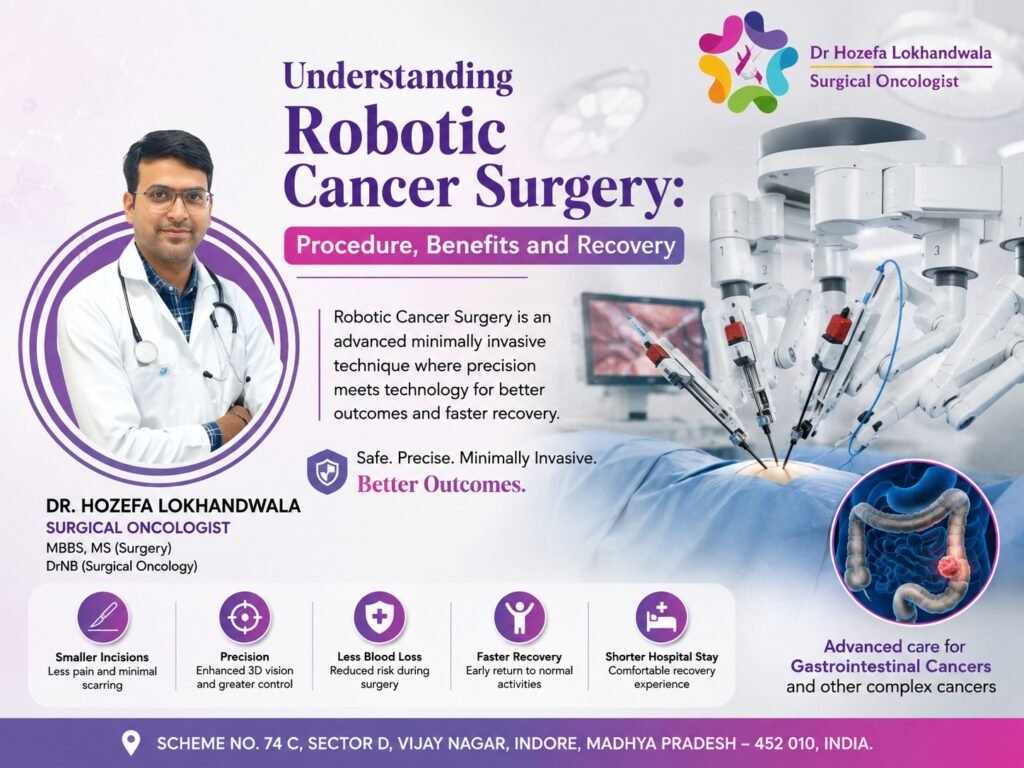
Understanding Robotic Cancer Surgery: Procedure, Benefits and Recovery

Cancer Surgeon in Indore care has evolved significantly with advances in surgical techniques. One such development is robotic-assisted surgery, which may be considered for selected cancer patients when surgery is part of the treatment plan. Robotic cancer surgery combines the expertise of a trained surgeon with the help of  robot to perform complex procedures through small incisions in suitable cases. For patients, hearing the term “robotic surgery” can raise many questions. Does the robot perform the operation? Is robotic surgery suitable for every type of cancer? What happens during the procedure? How long does recovery take? Understanding these aspects can help patients make informed decisions about their treatment. Robotic surgery is generally a form of minimally invasive surgery. The surgeon controls the robot throughout the procedure, using enhanced 3D visualization and specially designed instruments. It is not an independent treatment performed by a machine. Robotic Cancer Surgery in Indore may be considered for selected cancers depending on the location and stage of the disease, the patient’s overall health, and the surgeon’s assessment of the extent of the disease. The decision should always be individualized rather than based simply on the availability of technology. Dr. Hozefa Lokhandwala is a Senior Consultant Surgical Oncologist with more than 10 years of experience. His areas of surgical oncology include head and neck, breast, gastrointestinal and gynecological cancers, along with advanced cancer surgeries such as HIPEC for peritoneal surface malignancy. He also has experience in robotic urological, gynecological & GI cancer surgeries. Why Choose Dr. Hozefa Lokhandwala – Cancer Surgeon in Indore? Choosing a cancer surgeon involves more than looking at a procedure or technology. Cancer treatment often requires careful assessment, detailed discussion and coordination between different aspects of oncology care. Dr. Hozefa Lokhandwala is a Senior Consultant Surgical Oncologist with more than 10 years of clinical experience. His preference is to give the best surgical outcome to the patient by incorporating minimally invasive surgery in the form of robotic surgery, thereby ensuring quick recovery after advanced surgery. A patient-focused approach is particularly important in oncology. Dr. Lokhandwala emphasizes personalized attention, clear communication and honest guidance so that patients can understand their diagnosis and available treatment options. For patients looking for a Cancer Surgeon in Indore, understanding the area of expertise and experience with the relevant cancer type can be an important part of choosing appropriate care. About Dr. Hozefa Lokhandwala Dr. Hozefa Lokhandwala is a Senior Consultant Surgical Oncologist with more than 10 years of experience in cancer surgery. His areas of clinical interest include: Head and neck cancers Breast cancers Gastrointestinal cancers Gynecological cancers Urological cancers Advanced cancer surgeries HIPEC procedures Robotic urological, gynecological & GI cancer surgeries Surgical oncology requires an understanding of cancer biology, surgical anatomy, staging and the role of surgery within the wider cancer treatment plan. Depending on the diagnosis, surgery may be combined with chemotherapy, radiation therapy, targeted therapy. Dr. Lokhandwala’s clinical approach focuses on understanding each patient’s condition before deciding which form of surgery is appropriate. His emphasis is on to incorporation of robotic surgery in GI, gynaecological & urological cancers, so as to ensure early recovery from complex surgical procedures. Why Do Patients Consider Dr. Hozefa Lokhandwala for Cancer Surgery? There is no single treatment approach that is appropriate for every cancer patient. Important aspects of Dr. Lokhandwala’s practice: Vast Experience in different areas of cancer surgery Training from established medical institutions Experience with advanced cancer surgeries, including HIPEC Experience in robotic urological and gynecological cancer surgeries Personalized treatment planning Focus on patient communication and safety Consideration of multidisciplinary cancer care when appropriate Advanced technology including robot & AI can support surgical treatment, but the surgeon’s clinical judgment remains central. Patients should discuss the expected benefits, limitations, alternatives and potential risks before deciding on any surgical procedure. Experience and Surgical Excellence Cancer surgery can range from relatively straightforward procedures to highly complex operations involving multiple organs or anatomical structures. Surgical planning depends on the individual cancer and its stage. With more than 10 years of experience, Dr. Hozefa Lokhandwala has developed expertise across several areas of surgical oncology. Robotic surgery is his area of experience, particularly in urological and gynecological cancer surgery. What Conditions Does Dr. Hozefa Lokhandwala Treat through robotic surgery? Gastrointestinal Cancers Gastrointestinal cancers affect parts of the digestive system, including the stomach, intestines, colon and rectum, depending on the specific cancer. Possible symptoms can include persistent abdominal discomfort, changes in bowel habits, unexplained weight loss, blood in the stool, difficulty swallowing or persistent digestive symptoms. Almost all gastrointestinal cancers require surgical removal of the tumor and surrounding tissues. Here comes the role of minimally invasive or robotic approaches. It is keyhole surgery where incisions are minimal and surgery is performed by surgeon with the robotic system giving excellent visualisation with highly precise surgery. Gynecological Cancers Gynecological cancers can involve organs such as the uterus, ovaries, cervix. Symptoms may include abnormal vaginal bleeding, pelvic discomfort, persistent bloating or changes in urinary or bowel habits. Symptoms vary depending on the type of cancer. Treatment depends on the cancer type and stage. Surgery may be recommended as part of treatment in selected cases. Dr. Lokhandwala has experience in gynecological cancer surgery and robotic gynecological cancer procedures. Robotic surgery is done in early uterine and cervical cancers Urological Cancers Urological cancers can affect organs such as the kidneys, urinary bladder and prostrate. Symptoms vary according to the cancer and may include blood in the urine, urinary changes, pelvic discomfort or other unexplained symptoms. Robotic techniques may be used for early urological cancers, whereas it’s role in advanced cancers is limited. What Is Robotic Cancer Surgery? Robotic cancer surgery is a minimally invasive surgical technique in which the surgeon operates using a robotic-assisted surgical system. The system does not make independent treatment decisions or operate without the surgeon. The surgeon controls the instruments from a console and performs the procedure with the assistance of the robotic system. One of the important features of robotic surgery is the

Dr Hozefa Lokhandwala, Surgical Oncologist in Indore, highlighting awareness about gastrointestinal cancers, including symptoms, risks, prevention, and early cancer detection.
HIPEC

Understanding Gastrointestinal Cancers: Symptoms, Risks, and Prevention

Cancer can affect different parts of the body, including the digestive system. When cancer develops in organs such as the stomach, colon, rectum, esophagus, pancreas, liver, or small intestine, it is known as gastrointestinal cancer. These cancers can affect people of different age groups and often develop slowly over time. Understanding gastrointestinal cancers is important because early detection can significantly improve treatment outcomes. Many people ignore early warning signs, thinking they are simple digestive issues. However, symptoms that persist for weeks or months should never be ignored. If you are looking for guidance regarding digestive system cancers, consulting the Best Cancer Doctor in Indore can help you understand your condition and explore appropriate treatment options. Dr Hozefa Lokhandwala is dedicated to helping patients recognize symptoms early and receive timely care. Today, advances in cancer diagnosis and treatment have improved survival rates for many gastrointestinal cancers. With proper awareness, regular screenings, and healthy lifestyle choices, many cases can be detected early or even prevented. For patients seeking specialized care, Stomach Cancer Treatment in Indore has become more advanced, offering modern diagnostic techniques and treatment approaches. Under the care of Dr Hozefa Lokhandwala, patients can receive guidance tailored to their specific cancer type and stage. What Are Gastrointestinal Cancers? Gastrointestinal cancers are cancers that develop within the digestive tract and related organs. The digestive system plays a vital role in breaking down food, absorbing nutrients, and removing waste from the body. Many gastrointestinal cancers begin with abnormal cell growth that gradually develops into a tumor. Early diagnosis by the Best Cancer Doctor in Indore can help improve treatment outcomes and quality of life. Patients experiencing persistent digestive symptoms should seek medical evaluation from experts such as Dr Hozefa Lokhandwala. Early detection remains one of the most effective ways to improve survival rates. Common Symptoms of Gastrointestinal Cancers The symptoms of gastrointestinal cancers can vary depending on the affected organ. Some people experience obvious symptoms, while others may notice only mild changes initially. Persistent Abdominal Pain Ongoing stomach discomfort or abdominal pain should not be ignored. While occasional digestive discomfort is common, persistent pain may indicate an underlying issue that requires medical evaluation. Individuals experiencing long-term abdominal pain should consult the Best Cancer Doctor in Indore to identify the cause and receive timely treatment. Unexplained Weight Loss Sudden weight loss without changes in diet or exercise may be a warning sign of cancer. Cancer cells can affect the body’s metabolism and reduce appetite. Dr Hozefa Lokhandwala encourages patients to seek medical attention if they notice significant and unexplained weight loss. Changes in Bowel Habits Frequent diarrhea, constipation, narrow stools, or changes in bowel movement patterns may indicate colorectal cancer or other digestive tract conditions. These symptoms should be evaluated by the Best Cancer Doctor in Indore, especially if they persist for several weeks. Difficulty Swallowing Esophageal cancer can make swallowing difficult or painful. Patients may feel as though food is getting stuck in their throat or chest. Early diagnosis by Dr Hozefa Lokhandwala can help determine the cause and guide treatment planning. Blood in Stool The presence of blood in stool should always be investigated. It may indicate colorectal cancer, stomach cancer, or other gastrointestinal conditions. Patients seeking Stomach Cancer Treatment in Indore are often advised to undergo thorough diagnostic testing to identify the source of bleeding. Persistent Nausea and Vomiting Frequent nausea or vomiting that does not improve may indicate a digestive system disorder or cancer. If these symptoms continue for an extended period, consultation with the Best Cancer Doctor in Indore is recommended. Loss of Appetite A reduced desire to eat may occur in several gastrointestinal cancers. This symptom is often accompanied by fatigue and weight loss. Dr Hozefa Lokhandwala emphasizes the importance of early evaluation when appetite changes occur without a clear reason. Feeling Full Quickly Some patients feel full after eating only a small amount of food. This symptom can be associated with stomach cancer and should not be overlooked. Those experiencing this symptom may benefit from early assessment and Stomach Cancer Treatment in Indore if required. Why Early Detection Matters Early detection can make a significant difference in cancer treatment outcomes. When gastrointestinal cancers are identified at an early stage, treatment options are often more effective and less invasive. Regular health checkups and awareness of symptoms are essential. Consulting the Best Cancer Doctor in Indore at the earliest sign of concern can help ensure timely diagnosis. Dr Hozefa Lokhandwala believes that patient education and early screening play a major role in reducing the impact of gastrointestinal cancers. Benefits of early detection include: Better treatment success rates More treatment options Improved quality of life Reduced complications Increased survival rates Risk Factors for Gastrointestinal Cancers Understanding the factors that increase the risk of gastrointestinal cancers can help people take preventive measures and seek timely medical advice. While not everyone with these risk factors will develop cancer, awareness is important for maintaining long-term digestive health. Increasing Age The risk of many gastrointestinal cancers increases with age. Most cases are diagnosed in individuals over 50 years old, although younger adults can also be affected. Regular health screenings and consultations with the Best Cancer Doctor in Indore become increasingly important as people grow older. Tobacco Use Smoking and tobacco consumption are strongly linked to several digestive system cancers, including stomach, esophageal, pancreatic, and colorectal cancers. Avoiding tobacco products can significantly reduce cancer risk. Dr Hozefa Lokhandwala often advises patients to quit smoking as part of a healthier lifestyle plan. Excessive Alcohol Consumption Heavy alcohol intake can damage digestive organs and increase the likelihood of developing gastrointestinal cancers. Long-term alcohol use may contribute to inflammation and cellular damage. Reducing alcohol consumption is an important preventive step recommended by the Best Cancer Doctor in Indore. Unhealthy Diet A diet high in processed foods, red meat, salty foods, and unhealthy fats may increase cancer risk. At the same time, a lack of fruits, vegetables, and fiber can negatively affect digestive health. Many patients seeking Stomach

Breast cancer awareness concept showing women health care symptoms risk factors and treatment guidance by specialist in Indore
HIPEC

Breast Cancer in Women: Symptoms, Risk Factors, and When to Visit a Breast Cancer Specialist in Indore

Breast cancer is one of the most common cancers found in women across the world. Every year, millions of women are diagnosed with this condition. According to global cancer reports, breast cancer affects nearly 1 in 8 women during their lifetime. The good news is that early detection and right treatment can save lives. Many women ignore small changes in their bodies because they think it is normal. Sometimes there is no pain, and that makes it even harder to notice. That is why awareness is very important. Knowing the symptoms early and meeting the right doctor at the right time can make treatment easier and more successful. If you are searching for a trusted Breast Cancer Specialist in Indore, getting proper guidance from an expert consultant can help you understand the condition better and start treatment without delay. One of the name many patients trust is Dr Hozefa Lokhandwala, known for his patient-friendly approach, advanced cancer care & his expertise in breast cancer treatment. What Exactly Is Breast Cancer? Simple Understanding of Breast Cancer Breast cancer is a disease where cells inside the breast start growing in an unusual and uncontrolled way. Normally, cells grow and die in a fixed pattern. But in breast cancer, some cells keep growing and form a lump called a tumour. Some tumours grow slowly and stay in one place, while others may spread to nearby tissues or other parts of the body if not treated on time. Where Does It Start? Breast cancer can begin in different parts of the breast, such as: Milk ducts (the tubes that carry milk to the nipple) Milk-producing glands (lobules) Fatty and connective tissues of the breast Each type behaves differently, so proper diagnosis is very important. Who Can Get Breast Cancer? Breast cancer can affect women of any age, but it is more common in women above 40 years. However, younger women can also develop it. In rare cases, men may also get breast cancer. Why Early Detection Matters: Detecting breast cancer early makes a huge difference. When it is detected in the early stage, treatment becomes easier and more successful. Studies show that early-stage breast cancer can have a survival rate of more than 90% when treated properly. That is why regular checkups and awareness are so important. Consulting a trusted Breast Cancer Specialist in Indore or the Best oncologist in Indore at the right time can help in early diagnosis and better treatment outcomes. Common Symptoms of Breast Cancer Every Woman Should Know 1. Lump in the Breast or Underarm One of the most common symptoms of breast cancer is a lump in the breast or underarm area. The lump may feel hard in consistency, or different from the surrounding tissue. Some lumps are painless, which is why many women ignore them at first. Not every lump is cancer, but this should be checked by a doctor. 2. Change in Breast Size or Shape If one breast suddenly becomes larger, swollen, or changes shape, it could be a warning sign. Sometimes the breast may look uneven or feel heavier than usual. These changes may happen slowly, so regular self-checks are important. 3. Nipple Changes Changes around the nipple should never be ignored. Important signs include: Nipple turning inward Bleeding or unusual discharge Redness or dryness Crusting around the nipple These symptoms may indicate an underlying breast problem that needs medical attention. 4. Skin Changes on the Breast The skin on the breast may start looking different. Some women notice: Redness Thick skin Dimpling like orange peel These changes can happen because cancer cells affect the skin and tissues inside the breast. 5. Breast Pain That Does Not Go Away Breast pain is common during hormonal changes, but pain that stays for a long time or happens in one specific area should be checked. Pain along with swelling or a lump needs immediate medical attention. 6. Swelling Near the  Underarm Breast cancer can sometimes spread to nearby lymph nodes before a lump is even noticed in the breast. Swelling near the underarm may be an early warning sign. 7. Unusual Warmth or Burning Sensation Some women may feel warmth, heaviness, or a burning sensation in the breast. Although these symptoms can happen due to infections too, they should not be ignored if they continue. Important Risk Factors of Breast Cancer 1. Increasing Age The chances of developing breast cancer increase as women grow older, especially after the age of 40. This is why regular breast screening becomes more important with age. 2. Family History of Breast Cancer If a mother, sister, grandmother, or close family member had breast cancer, the risk may be higher. Some breast cancers are linked to inherited gene changes, such as BRCA1 and BRCA2 genes. Women with a strong family history should consult a doctor for regular monitoring and guidance. 3. Hormonal Changes Hormones play an important role in breast health. Certain hormonal conditions may increase the risk of breast cancer, such as: Starting periods at an early age Late menopause Hormone replacement therapy for a long time These conditions expose the body to estragon for a longer period. 4. Obesity and Weight Gain Being overweight, especially after menopause, can increase breast cancer risk. Extra body fat may raise hormone levels in the body, which can affect breast tissues. Regular exercise and maintaining a healthy weight can help reduce this risk. 5. Lack of Physical Activity Women who do not stay physically active may have a slightly higher risk of breast cancer. Daily activities like walking, yoga, or simple exercise can decrease risk for breast cancer. 6. Smoking and Alcohol Consumption Smoking damages body cells and affects overall health. Alcohol consumption may also increase breast cancer risk, especially when taken regularly over many years. When to Visit a Breast Cancer Specialist Don’t Wait for Symptoms to Become Serious Many women visit a doctor only when symptoms become painful or very noticeable. But breast cancer often starts with small changes that

: Cancer awareness in young adults image showing emotional support and guidance for young cancer patients by Dr. Hozefa Lokhandwala, Surgical Oncologist in Indore.
HIPEC

Cancer Awareness in Young Adults: Why Early Symptoms Should Never Be Ignored – Guidance by Dr. Hozefa Lokhandwala, Surgical Oncologist in Indore

Many people believe that cancer happens only after the age of 50 or 60. In my daily practice, I often meet young adults in their 20s, 30s, and 40s who are surprised when they are told that their symptoms may be related to cancer. As a surgical oncologist in Indore and cancer specialist in Indore, I want to explain one important thing very clearly: cancer can happen at any age, and early symptoms should never be ignored. Many young patients who later need cancer treatment in Indore first notice very small symptoms and ignore them. One of the biggest reasons cancer becomes serious is delay. Young adults often ignore early signs because they are busy, active, and feel they are too young to have a serious illness. They may think a lump is because of weakness, a mouth ulcer is because of spicy food, or unusual bleeding will go away on its own. Why Cancer Awareness in Young Adults Is Important   Worldwide, doctors are seeing an increase in certain cancers among young adults. Research shows that cancers such as oral cancer, breast cancer, thyroid cancer, colon cancer, cervical cancer, and testicular cancer are being detected more often in younger age groups than before. According to recent global studies, nearly 1 in 5 cancer cases is now diagnosed in people below the age of 50. This is why awareness has become extremely important. When cancer is found early: Treatment is simpler Surgery may be smaller Recovery is faster Chances of cure are much higher As a cancer specialist in Indore, I always tell my patients that noticing symptoms early can save both time and life. Early cancer treatment in Indore is simpler, safer, and gives much better results. Why Young Adults Often Ignore Symptoms   Many of my patients say: “I thought it was just stress.” “I was waiting for it to get better.” “I never imagined cancer at my age.” This delay is common because young adults are usually busy with studies, work, family, and daily life. They often feel healthy and strong, so they do not think a small symptom can be serious. Unfortunately, cancer does not always cause severe pain in the beginning. It often starts quietly. As an oncologist in Indore, I have seen that patients who come early usually need simpler cancer treatment in Indore compared to those who delay for months. Patients who wait usually need more extensive surgery and longer treatment. Early Symptoms That Should Never Be Ignored   Certain symptoms may not always mean cancer, but if they continue for more than two weeks, they should be checked. 1. A Lump or Swelling Anywhere in the Body   A lump in the neck, breast, mouth, underarm, or any other area should not be ignored, especially if: It keeps increasing in size It does not go away It is hard or painless As a surgical oncologist in Indore, I often see patients with neck lumps, breast lumps, or thyroid swelling that were ignored for many months. 2. Mouth Ulcer That Does Not Heal   A mouth ulcer that lasts more than two weeks can sometimes be an early sign of oral cancer. This is especially important for people who: Use tobacco or smoke Consume alcohol Have repeated irritation in the mouth Early consultation with a cancer specialist in Indore can help detect oral cancer at a stage when treatment is easier. This is why early cancer treatment in Indore is so important. 3. Unexplained Weight Loss   If you are losing weight without dieting or exercise, your body may be trying to tell you something. Sudden weight loss can be seen in cancers of the stomach, intestine, blood, or lungs. 4. Unusual Bleeding   Bleeding should never be ignored. Examples include: Blood in stool Blood in urine Bleeding from the mouth Unusual vaginal bleeding As an oncologist in Indore, I advise patients to get such symptoms checked without delay. 5. Persistent Tiredness   Feeling tired after work is normal. But extreme tiredness that does not improve even after rest may need medical attention. Many cancers can cause ongoing weakness because the body is using extra energy to fight the disease. 6. Difficulty Swallowing or Voice Changes   Persistent throat pain, change in voice, or difficulty swallowing can be an early sign of head and neck cancer. If these symptoms continue for more than two weeks, proper evaluation is important. 7. Change in Bowel Habits   Constipation, diarrhea, or blood in stool lasting for many days should not be ignored. In some young adults, this may be an early sign of colon or rectal cancer. Why Smoking and Tobacco Are Causing More Cancer in Young Adults – Guidance by Dr. Hozefa Lokhandwala Many young people believe that tobacco and smoking become harmful only after many years. They think serious diseases happen only after the age of 50 or 60. In my daily practice, I often meet patients in their 20s, 30s, and 40s who are shocked when they are told that their mouth ulcer, neck lump, throat pain, or cough may be related to cancer. As a surgical oncologist in Indore, I want to explain one important truth very clearly: smoking and tobacco are causing more cancer in young adults than ever before. Today, because of cigarettes, vaping, gutkha, pan masala, chewing tobacco, and smoking at an early age, we are seeing more cases of cancer in younger people. How Tobacco Damages the Body Tobacco contains more than 7,000 chemicals. Out of these, at least 70 are known to cause cancer. These harmful chemicals slowly damage the cells of the: Mouth Tongue Throat Voice box Lungs Food pipe Neck lymph nodes At first, the damage is small. A person may notice only: A mouth ulcer White patch Mild throat pain Persistent cough But over time, these damaged cells can grow in an abnormal way and turn into cancer. This is why early cancer treatment in Indore becomes necessary in many young patients. Common

Neck cancer treatment awareness image showing a woman with neck pain, highlighting expert surgical care by Dr. Hozefa Lokhandwala, Surgical Oncologist in Indore.
HIPEC

Neck Cancer Treatment in Indore – Complete Guide to Expert Surgical Care by Dr. Hozefa Lokhandwala

Neck swelling is something many people ignore in the beginning. I meet patients almost every week who come and say, “Doctor, there is a small lump in my neck. It does not pain. Should I worry?” Let me explain Not every neck lump is cancerous. But every neck lump should be examined properly. Early diagnosis makes treatment easier and safer. As a Surgical oncologist in Indore, my role is to carefully evaluate the swelling and guide the patient in the right direction. In this detailed guide, I will explain what neck cancer is, why it happens, its symptoms, diagnosis, and the options available for Neck cancer treatment in Indore and Neck tumor surgery in Indore in clear and simple language. Why Does Neck Cancer Happen? Our body cells grow in a controlled way. But when something keeps irritating or damaging those cells again and again, they can start growing abnormally. When that abnormal growth does not stop, it becomes cancer. Now let us understand the common reasons. 1. Tobacco Use – The Biggest Risk Factor In India, tobacco is the leading cause of head and neck cancers. This includes: Chewing tobacco Gutkha and pan masala Smoking cigarettes or bidis Tobacco contains harmful chemicals that directly damage the lining of the mouth, throat, and nearby lymph nodes in the neck. Over many years, this repeated damage increases the risk of cancer. As a Surgical oncologist in Indore, I see a strong connection between long-term tobacco use and patients requiring Neck cancer treatment in Indore. The risk increases with: Duration of use Frequency of use Combination of tobacco and alcohol Stopping tobacco significantly reduces future risk. 2. Alcohol Consumption Alcohol alone increases cancer risk. When combined with tobacco, the risk becomes much higher. Alcohol irritates the lining of the throat and makes it easier for harmful chemicals from tobacco to enter the cells. This combination is a major reason why many patients later require Neck tumor surgery in Indore. 3. Human Papillomavirus (HPV) Infection HPV is a viral infection that is now recognized as a cause of certain throat cancers. In recent years, we have seen an increase in HPV-related cancers, especially in younger patients who do not use tobacco. This type of cancer often affects the tonsil or base of the tongue and can spread to lymph nodes in the neck. Early detection improves outcomes significantly. 4. Previous Cancer of the Mouth or Throat Sometimes neck cancer is not the original cancer. It may be cancer that started in the mouth, throat, or voice box and then spread to lymph nodes in the neck. This is why patients treated earlier for oral or throat cancer must come for regular follow-ups. Delayed follow-up increases the chance of needing advanced Neck cancer treatment in Indore. 5. Thyroid Disorders and Radiation Exposure Thyroid cancer is one of the common causes of neck swelling. Risk factors include: Family history of thyroid cancer Exposure to radiation during childhood Certain genetic conditions Most thyroid cancers grow slowly and are highly treatable when diagnosed early. Neck tumor surgery in Indore for thyroid cancer often gives excellent long-term results. 6. Weak Immunity A weak immune system reduces the body’s ability to control abnormal cell growth. People at higher risk include: Those with chronic illnesses Patients on long-term immune-suppressing medicines Individuals with certain viral infections Strong immunity helps the body control early abnormal changes before they turn into cancer. 7. Poor Oral Hygiene Chronic irritation, repeated infections, and poor hygiene can contribute indirectly to cancer risk. Long-standing inflammation damages cells slowly over time. Simple habits like maintaining hygiene and regular dental checkups can reduce risk. 8. Genetic and Environmental Factors In some cases, family history plays a role. Certain inherited gene mutations increase susceptibility. Environmental exposure to: Industrial chemicals Air pollution Workplace toxins may also contribute in some individuals. What Is Neck Cancer? neck cancer usually means cancer that affects the structures inside the neck. The neck contains many important parts: Lymph nodes Thyroid gland Voice box (larynx) Salivary glands Nerves and blood vessels Muscles and soft tissues Most commonly, neck cancer refers to cancer that spreads to the lymph nodes in the neck from nearby areas like the mouth, throat, or tongue. Sometimes, the cancer can start in the thyroid gland or salivary glands. Let me explain it very simply. The neck lymph nodes acts like a pathway. If cancer develops in nearby regions, it can travel to the lymph nodes in the neck. As a Surgical oncologist in Indore, I always explain to patients that not all neck cancers are the same. The treatment depends on organ of origin and how far it has spread. Common Symptoms of Neck Cancer Symptoms can vary depending on the type of neck cancer, but there are some common warning signs. The most common symptom is: A Lump or Swelling in the Neck This is usually painless in the beginning. Many patients ignore it because it does not hurt. Other symptoms include: Persistent sore throat Difficulty swallowing Change in voice or hoarseness Ear pain without ear infection Unexplained weight loss Breathing difficulty Persistent cough Blood in saliva In thyroid cancer, symptoms may include: Swelling in the lower front of the neck Voice changes Difficulty swallowing I always tell patients: pain is not necessary for cancer. A painless swelling that keeps increasing in size must be evaluated. If these symptoms last more than 3 weeks, proper evaluation is needed to determine whether Neck cancer treatment in Indore is required. Is Every Neck Lump Cancer? No. And this is very important. Not every neck lump means cancer. There are many harmless causes of neck swelling, such as: Enlarged lymph nodes due to infection Tuberculosis lymph node Non cancerous Thyroid nodules Benign cysts Salivary gland infections In children and young adults, infections are a common cause of neck lumps. These usually reduce with medical treatment. However, certain features make a lump more suspicious: Hard consistency Rapid increase in size Fixed to surrounding tissue Associated

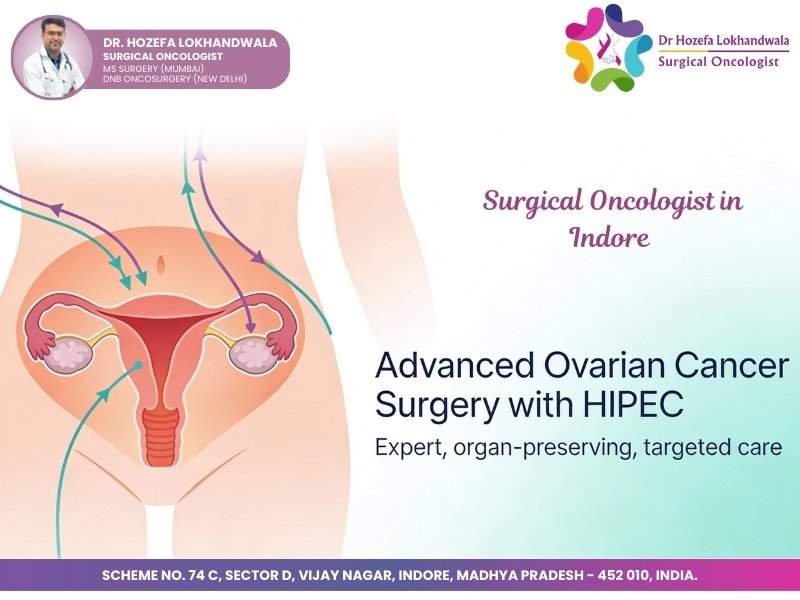
Advanced ovarian cancer surgery with HIPEC illustration showing uterus, ovaries and heated chemotherapy flow, promoting ovarian cancer surgery in Indore by an experienced HIPEC specialist and surgical oncologist.
HIPEC

Ovarian Cancer Surgery in Indore: Advanced Ovarian Cancer Surgery with HIPEC – A Successful Treatment Approach

Hearing the word “cancer” can feel very scary. Many patients and families feel confused, worried, and full of questions. This fear increases when the cancer involves the ovaries, which play a vital role in a woman’s body. If you are looking for advanced ovarian cancer surgery in Indore, you are in the right place. As a doctor, I meet many women and families who arrive feeling afraid. My first goal is always to explain their condition slowly, clearly, and kindly. ovarian cancer surgery in Indore Understanding the problem helps reduce fear and strengthens hope. I will explain advanced ovarian cancer surgery with HIPEC in simple words. I will cover what ovarian cancer is, why it occurs, how we treat it, and how a special procedure called HIPEC helps many patients improve quality of life and survival. I am Dr Hozefa Lokhandwala, Consultant Surgical Oncologist and HIPEC Specialist in Indore. I wrote this blog as I would explain it to patients sitting in my clinic. Understanding Ovarian Cancer in Simple Words Ovarian cancer begins in the ovaries. These small organs help produce eggs and hormones. Sometimes, ovarian cells start growing abnormally. These abnormal cells form cancer. In the early stages, ovarian cancer develops quietly. ovarian cancer surgery in Indore It does not produce obvious symptoms, so many women do not realize they have it until it grows or spreads inside the abdomen. As the Best Oncologist in Indore, I reassure patients that ovarian cancer does not result from their habits, diet, or daily activities. It occurs naturally, and no one is at fault. What Is Advanced Ovarian Cancer? Doctors call ovarian cancer “advanced” when it spreads beyond the ovaries. Cancer cells travel to other areas in the abdomen, usually slowly and silently. Many women receive a diagnosis at a later stage, often when they consult the Best Oncologist in Indore for proper evaluation. Surgery becomes more complex when cancer spreads to multiple areas. However, with precise planning, an experienced surgical team, and advanced treatment, ovarian cancer surgery in Indore, offering patients hope, disease control, and improved long-term outcomes. Where Advanced Ovarian Cancer Can Spread Peritoneum (lining inside the abdomen): This lining covers many organs and represents one of the most common spread locations. Intestines: Cancer in the intestines can cause bloating, abdominal discomfort, or changes in bowel habits. Bladder: The bladder may become affected, leading to frequent urination or pressure in the lower abdomen. Other nearby organs: Depending on the cancer’s stage, it may involve other abdominal organs. Common Causes of Ovarian Cancer Ovarian cancer does not have a single cause. Sometimes it develops quietly, without a clear reason. Awareness and timely medical consultation play a crucial role. Seeing the Best Cancer Surgeon in Indore can help detect cancer early and start prompt treatment. Most women develop ovarian cancer without a clear cause. ovarian cancer surgery in  Indore Regular health check-ups, noticing persistent changes in the body, and consulting a doctor early can significantly improve early detection and treatment outcomes. Risk factors include: Family history of cancer: Close relatives with ovarian, breast, or related cancers may increase risk. Age: The risk rises with age, particularly after menopause. Genetic changes: Inherited gene changes can increase susceptibility. Hormonal factors: Long-term hormonal shifts may contribute. Late menopause or early periods: Extended hormone exposure may slightly increase risk. Never having been pregnant: Some studies link this with higher risk. Symptoms You Should Never Ignore Early ovarian cancer symptoms often seem mild. Many women mistake them for gas or digestive issues. ovarian cancer surgery in Indore Common warning signs include, Although these signs may appear minor, they often precede serious illness. If symptoms persist for more than two to three weeks or feel unusual, consult a doctor immediately. Early action improves diagnosis and treatment success. Frequent bloating Lower abdominal pain or heaviness Feeling full quickly while eating Changes in urination Unexplained weight loss or gain Persistent fatigue When Should You See a Doctor? See a doctor if your body shows unusual changes or persistent discomfort. Don’t dismiss symptoms because they seem mild or painless. Early consultation makes treatment simpler and recovery faster. Identifying cancer early allows for more options and better outcomes. As the Best Cancer Surgeon in Indore, I advise patients to seek evaluation promptly. You should consult a doctor when: Symptoms last more than 2–3 weeks without improvement Pain returns despite rest or medication You feel something abnormal in your body even if you cannot describe it clearly Discomfort, fatigue, or weakness starts affecting daily activities Any bodily change worries you How Is Ovarian Cancer Diagnosed? Doctors use several tests to understand ovarian cancer and its extent. Accurate diagnosis guides the right treatment. After evaluation, we can decide whether surgery, chemotherapy, HIPEC, or a combination is appropriate. Every patient differs, and every cancer behaves uniquely. As the Best Oncologist in Indore, I tailor each treatment plan to the patient’s condition, strength, and overall health for the best possible outcome. Common Diagnostic Tests Ultrasound or CT scan: These imaging tools reveal ovarian size, organ involvement, and disease spread. Blood tests: Certain markers suggest ovarian cancer and assess overall health. Biopsy or surgery: Tissue samples confirm the diagnosis and help determine cancer type and stage. What Is HIPEC? HIPEC stands for Hyperthermic Intraperitoneal Chemotherapy. The procedure may sound complex, but the concept is simple. ovarian cancer surgery in Indore After removing visible cancer, surgeons wash the abdomen with warm chemotherapy medicine. Administering the medicine directly inside the abdomen targets remaining cancer cells more effectively than systemic chemotherapy. Benefits of HIPEC Kills tiny, hidden cancer cells Penetrates deep tissue where cancer may hide Works better when heated, enhancing effectiveness Surgeons perform HIPEC during surgery rather than afterward, acting immediately when cancer burden is lowest. HIPEC also treats peritoneal surface malignancies, such as pseudomyxoma peritonei and peritoneal mesothelioma. As the Best HIPEC Specialist in Indore, I recommend HIPEC for carefully selected patients to maximize recovery and long-term outcomes. Frequently Asked Questions (FAQs) 1. Is HIPEC surgery painful?

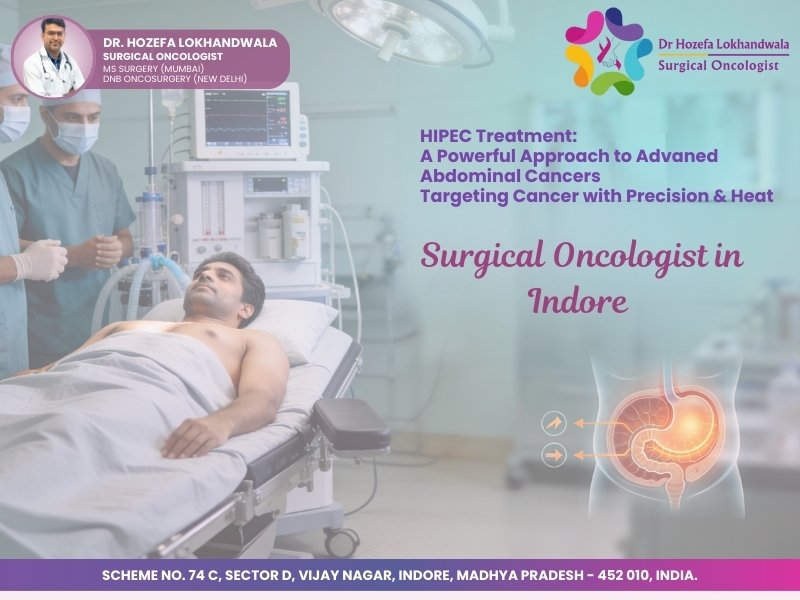
Patient lying on an operation table with surgical team and a glowing abdominal diagram showing heated chemotherapy, representing HIPEC treatment in Indore by an experienced surgical oncologist and cancer doctor in Indore
HIPEC

HIPEC Treatment: A Powerful Approach to Advanced Abdominal Cancers | Best HIPEC Specialist in Indore

When you face an advanced stage of cancer, the available treatment options may seem limited. However, doctors today use an innovative therapy called HIPEC (Hyperthermic Intraperitoneal Chemotherapy), which has transformed the treatment approach for several abdominal cancers. Because of this breakthrough, many patients who once had very few choices now have new hope. If you are searching for the Best HIPEC Specialist in Indore, understanding how HIPEC works, who benefits from it, and what recovery looks like will help you make confident decisions. What Is HIPEC? HIPEC stands for Hyperthermic Intraperitoneal Chemotherapy.It uses two powerful cancer-fighting methods together: Cytoreductive Surgery – Doctors remove all visible tumors from the abdomen. HIPEC Procedure – Immediately after surgery, doctors circulate heated chemotherapy inside the abdomen. Instead of sending chemotherapy into the bloodstream, HIPEC delivers medicine directly to the cancer area. The heat strengthens the effect of the chemotherapy, and because the treatment stays inside the abdomen, the rest of the body experiences far fewer side effects. How HIPEC Works – Step-by-Step Cytoreductive Surgery (CRS) The surgical oncologist removes all visible tumors from the abdominal cavity. This step may take several hours and can include removing affected parts of organs like the intestines or ovaries. Circulation of Heated Chemotherapy Next, the specialist pumps heated chemotherapy (around 42°C) inside the abdomen for 60–90 minutes. The heat weakens cancer cells and helps the medicine reach deeper tissues. Rinsing and Closure After the treatment, the team drains the chemotherapy, rinses the abdomen with saline, and closes the incisions. The patient then begins recovery under close monitoring. Why HIPEC Works Better Than Traditional Chemotherapy Traditional chemotherapy travels through the bloodstream and reaches the entire body. Because of this, patients often experience hair loss, nausea, fatigue, and low immunity. In contrast, HIPEC targets only the abdominal cavity, allowing higher drug concentration in the cancer area while reducing overall side effects.Additionally, heat increases the effectiveness, Best HIPEC Specialist in Indore giving HIPEC a strong advantage in suitable cases. Cancers That Benefit from HIPEC HIPEC works well for cancers that spread inside the abdominal cavity, such as: Advanced or recurrent Ovarian Cancer Appendiceal Cancer Colorectal/Colon Cancer with peritoneal spread Gastric Cancer Peritoneal Mesothelioma Pseudomyxoma Peritonei (PMP) If you have any of these conditions, meeting the Best HIPEC Specialist in Indore will help you understand if HIPEC is right for you. Who Qualifies for HIPEC? Doctors evaluate several factors before recommending HIPEC: The cancer must remain inside the abdomen (not spread to lungs or bones). The patient must be strong enough to undergo major surgery. The tumor type must respond to heated chemotherapy. The specialist reviews previous treatments, performance status, and organ function. Through imaging scans, blood tests, and sometimes diagnostic laparoscopy, the Surgical oncologist in Indore determines whether Best HIPEC Specialist in Indore will work for the patient. Benefits of HIPEC Treatment HIPEC offers several powerful benefits: Higher Local Chemotherapy Dose Doctors can use stronger chemotherapy because it stays inside the abdomen. Fewer Systemic Side Effects Since the medicine does not circulate throughout the body, patients experience less nausea, hair loss, and immune suppression. Better Survival and Quality of Life Studies show that patients often live longer and enjoy better quality of life when they undergo cytoreductive surgery with HIPEC. Eliminates Microscopic Cancer Cells Even after removing visible tumors, tiny cells can remain. HIPEC destroys these invisible cells effectively. Shorter Chemotherapy Duration HIPEC acts as a one-time, high-impact treatment during surgery, unlike months of traditional chemotherapy cycles. Possible Risks and Side Effects HIPEC is a major surgery, and like all advanced procedures, it has risks. Patients may experience: Temporary digestive issues (nausea or diarrhea) Weakness or fatigue Infection or delayed wound healing Rare kidney or liver strain An experienced and Best HIPEC Specialist in Indore carefully monitors these issues and helps the patient recover safely. Recovery After HIPEC Recovery depends on the patient’s overall health and surgery extent. Most patients stay in the hospital for 10–14 days. During recovery: ICU monitoring continues for 1–2 days. Diet and bowel movements return gradually. Regular follow-ups and scans track healing. Most patients return to light activity in 4–6 weeks and resume normal life in 2–3 months. HIPEC Success Rates and Global Research Worldwide studies reveal strong outcomes: For example: In colorectal cancer with peritoneal spread, CRS + HIPEC improves median survival from around 12 months to over 30 months in selected patients. In PMP (Pseudomyxoma Peritonei), many studies show 5-year survival rates above 70%. Success depends on early diagnosis, tumor biology, surgery completeness, and the surgeon’s expertise. HIPEC Treatment in Indore Indore has become a leading center for advanced oncological treatments, including HIPEC. Modern hospitals now provide state-of-the-art facilities for cytoreductive surgery and HIPEC under highly trained specialists. Dr. Hozefa Lokhandwala, recognized as one of the Best HIPEC Specialist in Indore, performs complex HIPEC and cytoreductive procedures with precision. Patients value his compassionate approach, modern surgical techniques, and deep experience in abdominal cancer care. What to Expect Before and After Meeting a HIPEC Specialist Before HIPEC The oncologist performs detailed scans (CT/MRI). You receive nutritional and physical preparation plans. The team explains the benefits, risks, and recovery process. After HIPEC Continuous monitoring in the hospital Gradual return to normal diet and activity Periodic scans to detect any recurrence early Most patients feel tired initially but regain strength steadily. How to Prepare Mentally and Physically Major cancer surgery brings emotional challenges. You can prepare better by: Learning about HIPEC from reliable medical sources Discussing all questions with your specialist Following your diet and hydration plan Relying on family support during recovery Myths and Facts About HIPEC Myth Fact HIPEC is experimental. HIPEC is a globally established treatment. HIPEC causes more side effects. It usually causes fewer overall side effects. Only foreign hospitals offer HIPEC. Many top Indian centers perform HIPEC, including Indore. HIPEC cures all cancers. It works only for selected abdominal cancers. Why Choose the Best HIPEC Specialist in Indore The right doctor plays a key role in achieving the best outcomes.The Best HIPEC

Scroll to Top